Film-Plateau: Otto e Mezzo (1963)
Federico Fellini, Italië & Frankrijk, 138’, Italiaans gesproken, Engels ondertiteld
i.s.m. Film-Plateau
ticket: €8 (standaard) / €4 (reductie)
RESERVEER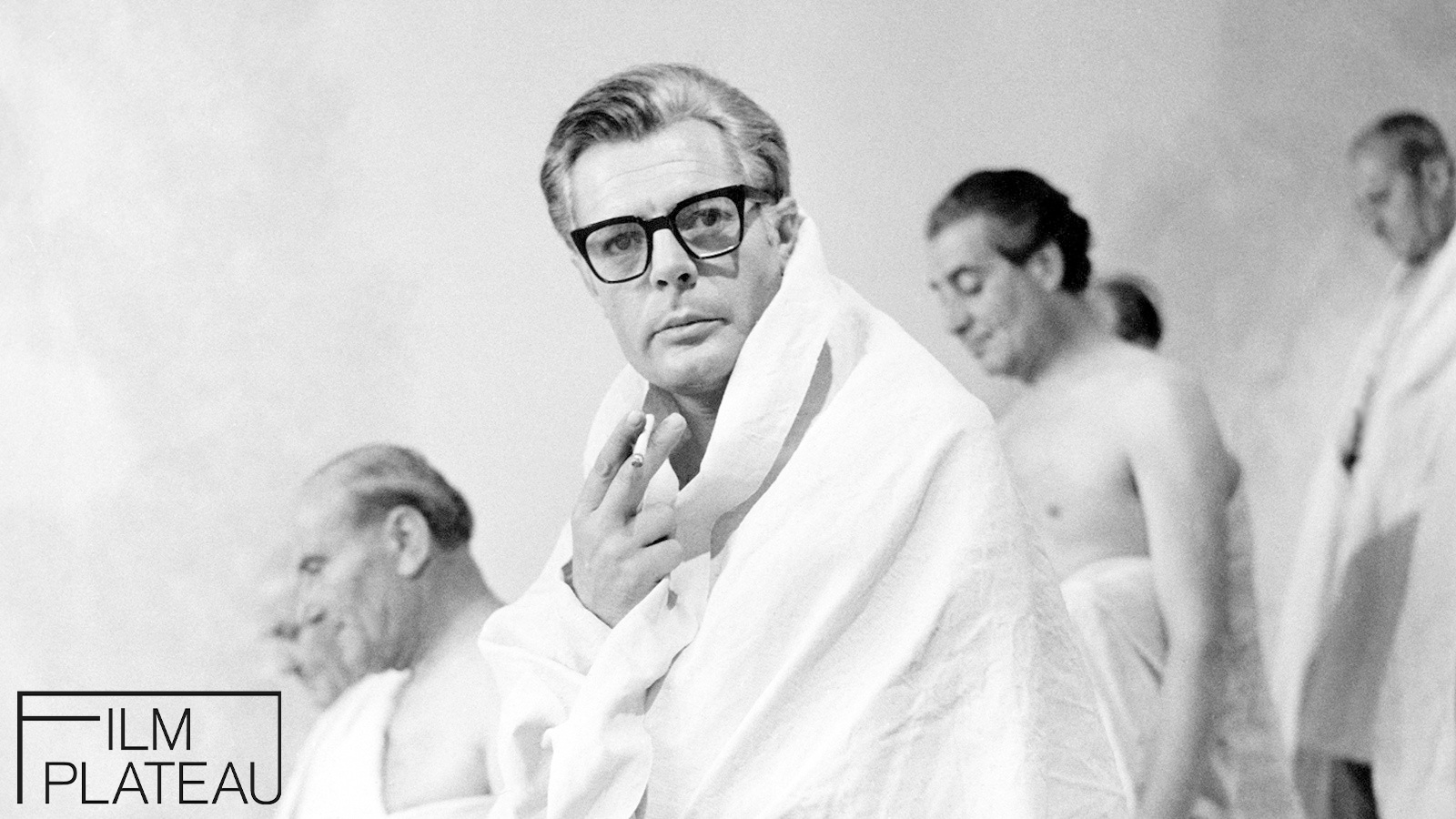
Duik mee in het hoofd van Federico Fellini.
Met zeven langspelers op de teller, waaronder La
Strada (1954) en La Dolce Vita (1960), en nog een
handvol kortfilms, begon de Italiaanse cineast aan
wat toepasselijk 8½ zou heten. Otto e mezzo volgt
de ogenschijnlijk chaotische gedachtenstroom van
filmregisseur Guido Anselmi (Marcello Mastroianni),
wiens creatieve reservoir akelig leeggelopen is. Zijn
echtgenote en minnares trekken elk aan een arm,
terwijl een ongeduldige producent, sluwe critici en
wanhopige actrices vrolijk verder knabbelen aan
zijn toch al schaarse tijd. Maar onthoud: wanneer de
realiteit te benauwd wordt, kan zelfs een kiertje van
een autoraam plots als verlossing aanvoelen.
Anselmi (lees: Fellini zelf) besluit van zijn
inspiratieloosheid gewoon zijn onderwerp te maken
en tovert zo een onweerstaanbare ‘film over film’
uit zijn hoed. In deze wilde, typisch Felliniaanse
introspectie lopen droom en werkelijkheid
voortdurend door elkaar, een gok die in 1964 beloond
werd met twee Oscars en onder de maestro’s beste
werken wordt gerekend. Bravo, Federico!
Deze vertoning wordt ingeleid door onderzoeker Stijn Van Koetsem.
__________________________________________________________________
ENGLISH Delve into the mind of Federico Fellini. With seven feature films to his name, including La Strada (1954) and La Dolce Vita (1960), and a handful of short films, the Italian filmmaker embarked on what would aptly be called 8½. Otto e mezzo follows the seemingly chaotic stream of consciousness of film director Guido Anselmi (Marcello Mastroianni), whose creative reservoir has run dry. His wife and mistress each pull at one of his arms, while an impatient producer, cunning critics and desperate actresses cheerfully nibble away at his already scarce time. But remember: when reality becomes too stifling, even a crack in a car window can suddenly feel like salvation.
Anselmi (read: Fellini himself) decides to simply make his lack of inspiration his subject matter and thus conjures up an irresistible “film about film” out of thin air. In this wild, typically Fellinian introspection, dream and reality are constantly intertwined, a gamble that was rewarded with two Oscars in 1964 and is considered one of the maestro's best works. Bravo, Federico!
This screening will be introduced by researcher Stijn Van Koetsem.